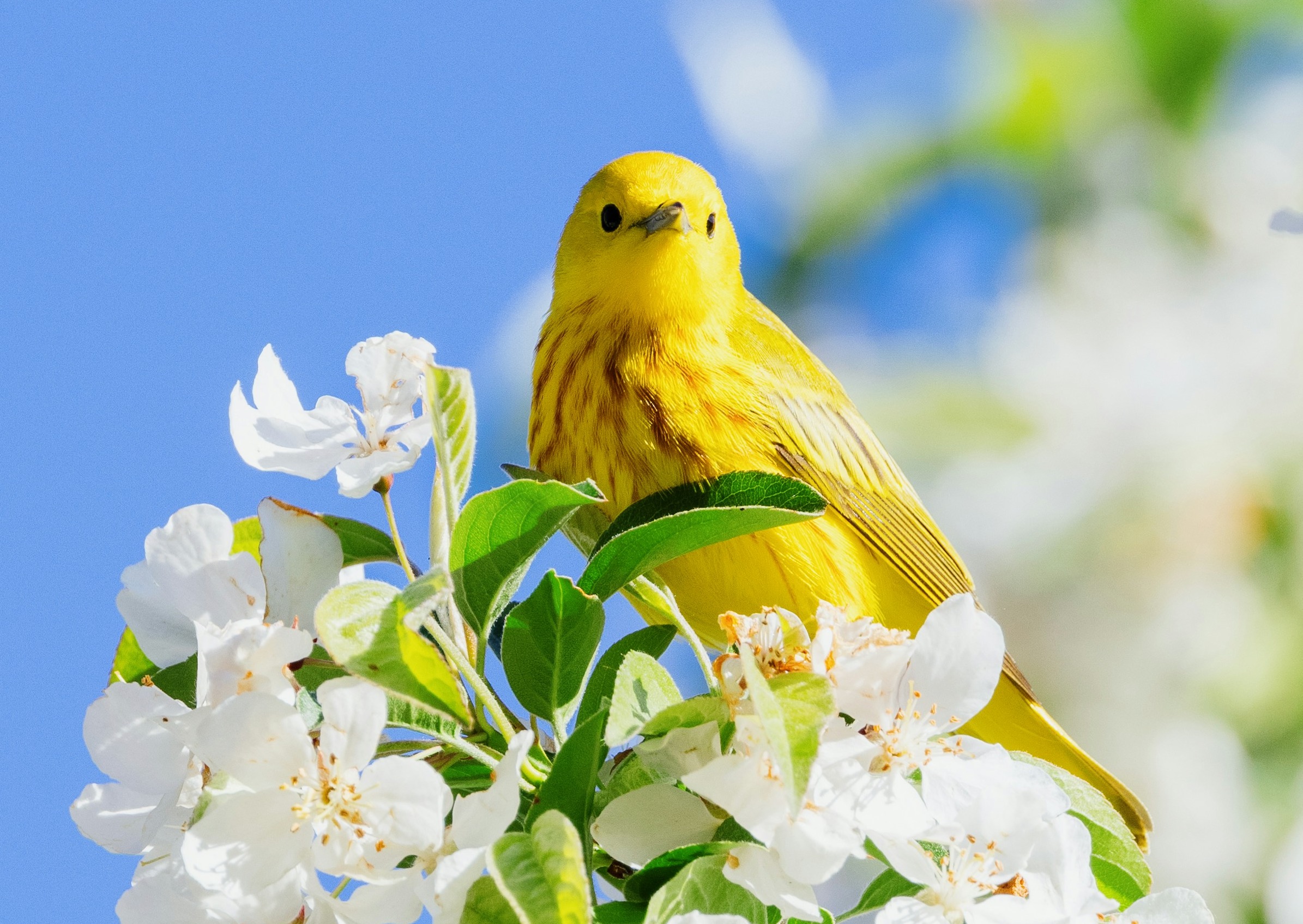
In April and May, the residents of the Chicago area, including Evanston, will see thousands of songbirds migrating north to breed. So many fly through or stop in our area that you can follow them on radar! These tiny visitors will rest and eat insects in our yards to fuel up and, if you’re lucky, you might spot them in their bright, breeding colors.
But migrating birds need our help. According to the American Bird Conservancy, millions of birds die after hitting windows in the U.S. each year and almost 50% of these are related to residential windows.
In daylight, birds hit windows because they see reflections of vegetation or see indoor plants through the glass. At night, nocturnal migrants (including most songbirds) crash because they fly into lighted windows.
Addressing collisions at your home makes a huge difference for birds. At night you can turn off lights or close shades or drapes. There are also many deterrents you can put on the outsides of your windows to keep birds from hitting them. You can, for example, apply patterns, films, or decals. Check out the American Bird Conservancy’s website for solutions and details here.
To attract more birds to your yard that are native to our region, welcome insects, too. Most warblers eat insects. Here are a few tips:
- Don’t spray your yard to treat mosquitoes or get rid of other insects and spiders. To keep mosquitoes at bay, get rid of any standing water on your property. Even the amount that collects in the bottom of a flower pot can breed mosquitoes.
- Invest in plants that are native to our area, and leave the leaves in your garden beds. They will decompose and build the soil, all the while providing a place for insects to hide and birds to find them!
- Keep in mind that artificial light at night harms birds and insects. Outdoor lighting should only be used when necessary. It should shine down toward the ground, not out or up. Dark Sky International recommends using motion sensors or timers on outdoor lighting. Also, lights should only be as bright as needed and be warm spectrum lights, measuring 3,000 Kelvin or less.
- Last but not least, provide birds with a clean place to bathe and drink. Remember to change the water in bird baths at least every three days to keep them mosquito free!
Interested in knowing more about our region’s birdlife? Join the Earth Care Committee on May 18th for a bird walk at 8:00 a.m. and a talk about birding during Adult Ed hour at 9:15 a.m. in the dining room. More details to come in the newsletter!
Photo by Mark Olsen on Unsplash